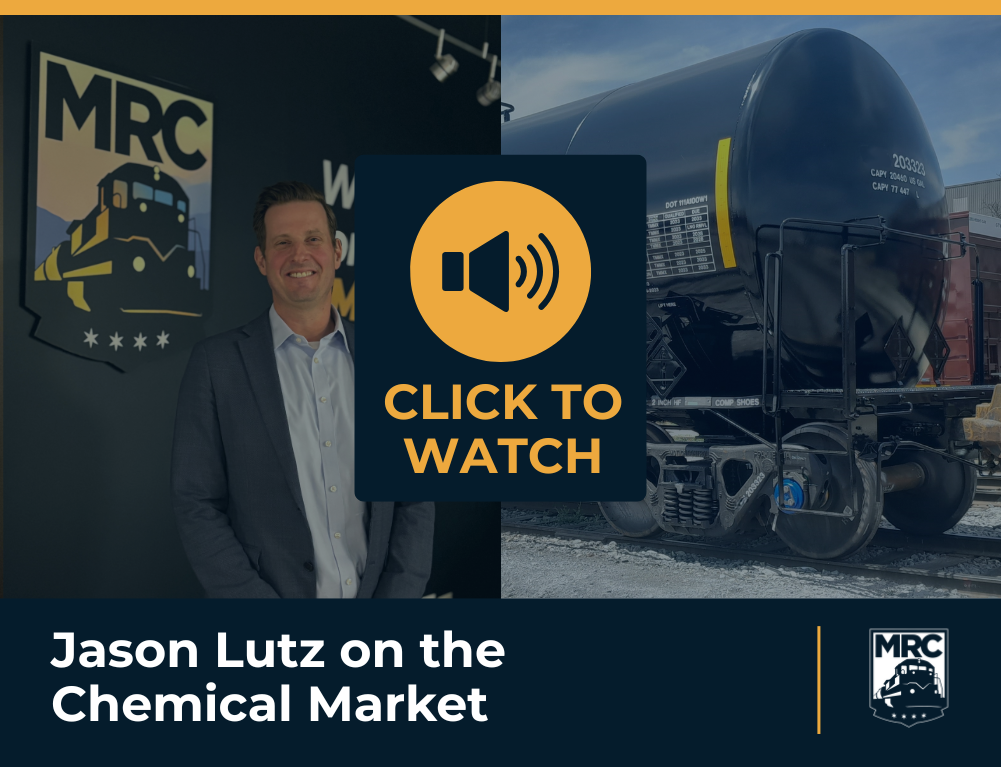
In this blog, Jason Lutz, MRC’s Senior Director of Sales & Marketing, gives his thoughts on the current state of chemical shipping and what might be coming next in the future.
Jason: Financially, it often makes sense to own railcars. But for tank cars especially, the maintenance, regulatory requirements, and obsolescence risk often make leasing a better option. Leasing frees your capital to use on your core competencies of your business.
Covered hoppers have less maintenance and fewer regulatory obligations than tank cars. But if you’re not certain as to the long-term use of them, you may want to consider leasing. Railcars generally have a 50-year asset life.
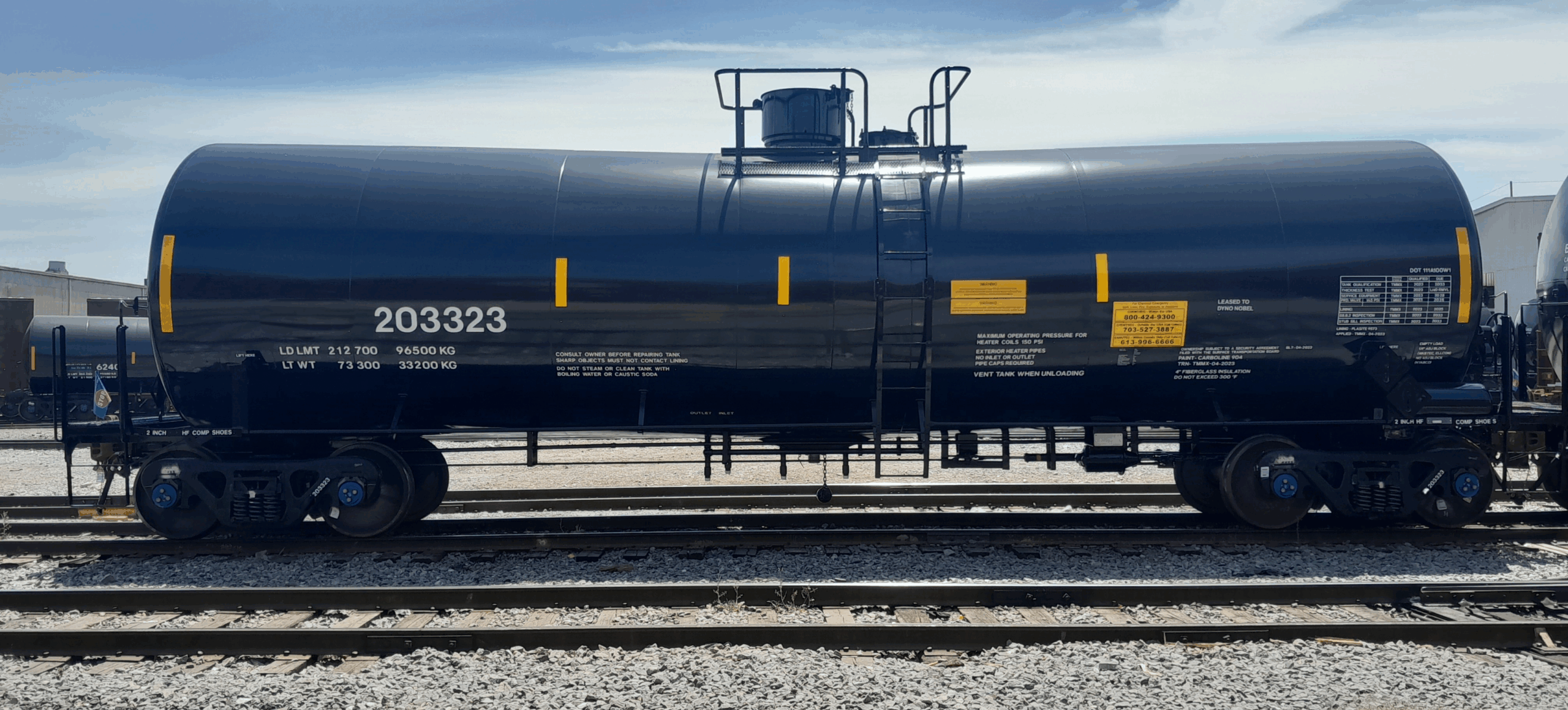
Regulatory standards can change, like the FAST Act requirement, which affected tens of thousands of railcars in flammable liquids service. But more often, business needs change. For example, maybe your supplier now can deliver railcars they manage, or pipeline, or truck options emerge.
Leasing companies like MRC provide value by providing the use of a modern, well-maintained railcar for a fixed period. And if your needs change, we can remarket the car to another party. That ends your lease obligations versus having invested capital tied up in an underperforming or unused asset.
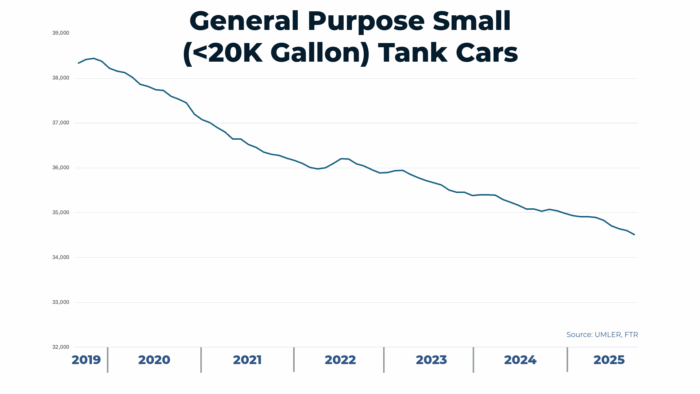
Many general-purpose tanks in the flammable liquid and corrosive services, such as base chemicals and fertilizers, are older 263 GRL (Gross Rail Load) tanks. This reduces the efficiency of your freight spend. The supply of these tanks has declined since before COVID.
The other one is 23.5s, the old chemical workhorse. It carries corrosives, flammables, and non-regulated commodities. Flammable liquids have been moved to, or still need to be moved into, FAST Act-compliant tank cars, while corrosive and other commodities can remain in DOT-111s by current regulation. Some commodities have moved into larger 25,500-gallon DOT-117 tanks to preserve capacity, as the FAST Act cars generally are heavier than legacy tanks.

FTR predicts carloads for general-purpose tanks 22,000 gallons and smaller to grow to 245,000 carloads quarterly by 2027.
Steel prices, material surcharges, and interest rates can all affect the final lease rate.
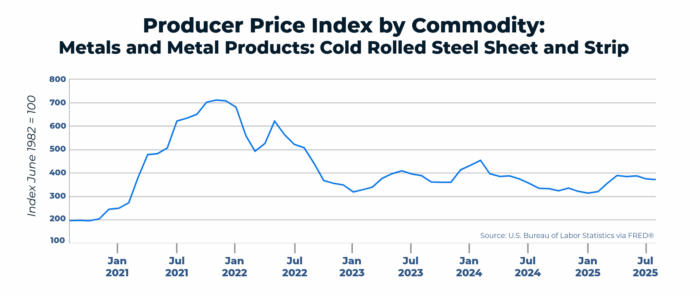
Steel prices have somewhat stabilized this year.
Interest rates have also somewhat stabilized and have been trending lower, at least compared to the past two years, which equates to more certainty related to the final lease costs when ordering new equipment.

New car lease rates can well exceed those for legacy equipment, but you gain significant capacity, which is especially important if your freight is priced per railcar versus by ton.
Additionally, with older equipment, especially in corrosive services, how often and what you’re spending on bad orders, shop freight expenses, in addition to missed customer obligations.
One thing to consider: tanks built in Mexico are governed by the USMCA and not subject to tariffs. However, steel and other components are, which can affect your final lease rate.
The USMCA is due to be renegotiated late in 2026.
There are a few different options.
As cars are approaching the end of their life, MRC can evaluate your existing fleet and remarket them, or scrap and replace them with newer, maximum capacity equipment. Or, if your existing lease fleet is older, smaller capacity, or suboptimal for your needs, MRC can provide newer equipment, which can increase your capacity and increase fleet availability. Or lastly, if you want to free up working capital, MRC can purchase and lease back, or remarket, your own railcars.
MRC is a full-service operating lessor with in-house engineering, mechanical, and financial expertise. We participate on various federal governing boards to stay on top of changing regulations. And we’d be happy to discuss your specific needs.
Click here for Jason Lutz’s insights on what’s happening in the chemical shipping industry and what we should expect in the coming years.