In this blog, Bryan Vaughan, MRC’s VP of Sales, Marketing & Business Development, shares his insight on the current state of agriculture and grain.
Bryan Vaughan: Covered hoppers are important for Modern Rail Capital, especially on my side of it, where I lead the sales team, and for capital employment, investment and leasing.
Covered hoppers make up a big demand overall in the railcar industry, and we’re at a unique inflection point in that we have record crops in corn and soybeans. The railroad supply is looking great. The service is looking robust.
It’s the demand side that tends to be more of a challenge and a bit of an outlier. It’s a unique inflection, given some of the headwinds we’ve discussed in the past related to tariffs.
We haven’t seen much of the impact of tariffs when looking backward. But now, as we enter October and get into Q4, what do I think that means? There could be a more significant impact, especially for certain types of whole grains within the covered hopper industry.

It’s been a challenging 2025 from a new-build perspective and capital deployment overall for all railcars, for a lot of reasons. I mentioned tariffs being one of them, no doubt. It’s important that when we talk about covered hoppers, we talk about their specific capacity and what type of commodities they’re targeted to. That’s a big part of providing you with the answer.
From a commodity perspective and a rail services perspective, there’s been great supply. I mentioned a record harvest of soybeans and grain that is happening now. And the service by railroads has been really good. Year over year, looking at 2024 compared to this year, we’re up slightly on both volume, driven a lot by grain right now, and we’re up on service as well. Service has been good, railroads have been doing well overall and we’ve actually increased our share of volume so far. That’s pretty much through August.
Looking forward, grain shipments overall, even though they’ve been positive, face a lot of challenge on the demand side. A big part of what may dampen exports really relates to soybeans. We’re having strong demand and good price points right now because of demand in wheat and corn.
But we’ve got a big question mark on soybeans. That’s softening demand overall because of uncertainty, and that means uncertainty in the export market and uncertainty about tariffs. We’re competing more head-to-head with countries like Brazil and Argentina and that’s really impactful.
However, I do see some unique demand for grain products such as meals and DDG (distillers dried grains) as well as fertilizer. So there are bright spots and it’s not all dark for the use of 5,000 to 5,400 cubic foot capacity grain cars. I just think it’s a little slower for those cars, and quite frankly, maybe paused as we get toward 2026.
Overall, it’s a story of hope.

We’ve seen a lot of retirements of older equipment. This is the natural life cycle of cars aging out — and the cost to maintain those cars with new cars coming in that are somewhat more modern, more efficient (possibly with lighter tare weights or shorter so you can fit more cars on the unit train, etc.).
Many of the cars that have been aging out through attrition were built in the ’80s. So that’s approaching their useful, productive and certainly economic life. And there’s still room to run for the conversion of those cars to the larger grain cars. The challenge is that because of the lack of demand, the cost-benefit of replacing those aged cars with brand new cars has slowed.
Typically, I would expect attrition of about 3,000 to 5,000 cars per year. But given some of the headwinds I mentioned, we’re really at a much slower pace of replacement and attrition. I do expect it will grow more in 2026 than what we have today, but it’s going to be at a much slower pace.
I think overall the organic demand right now is more paused across the board for covered hoppers other than the unique ones I mentioned (fertilizer and some of the grain products).
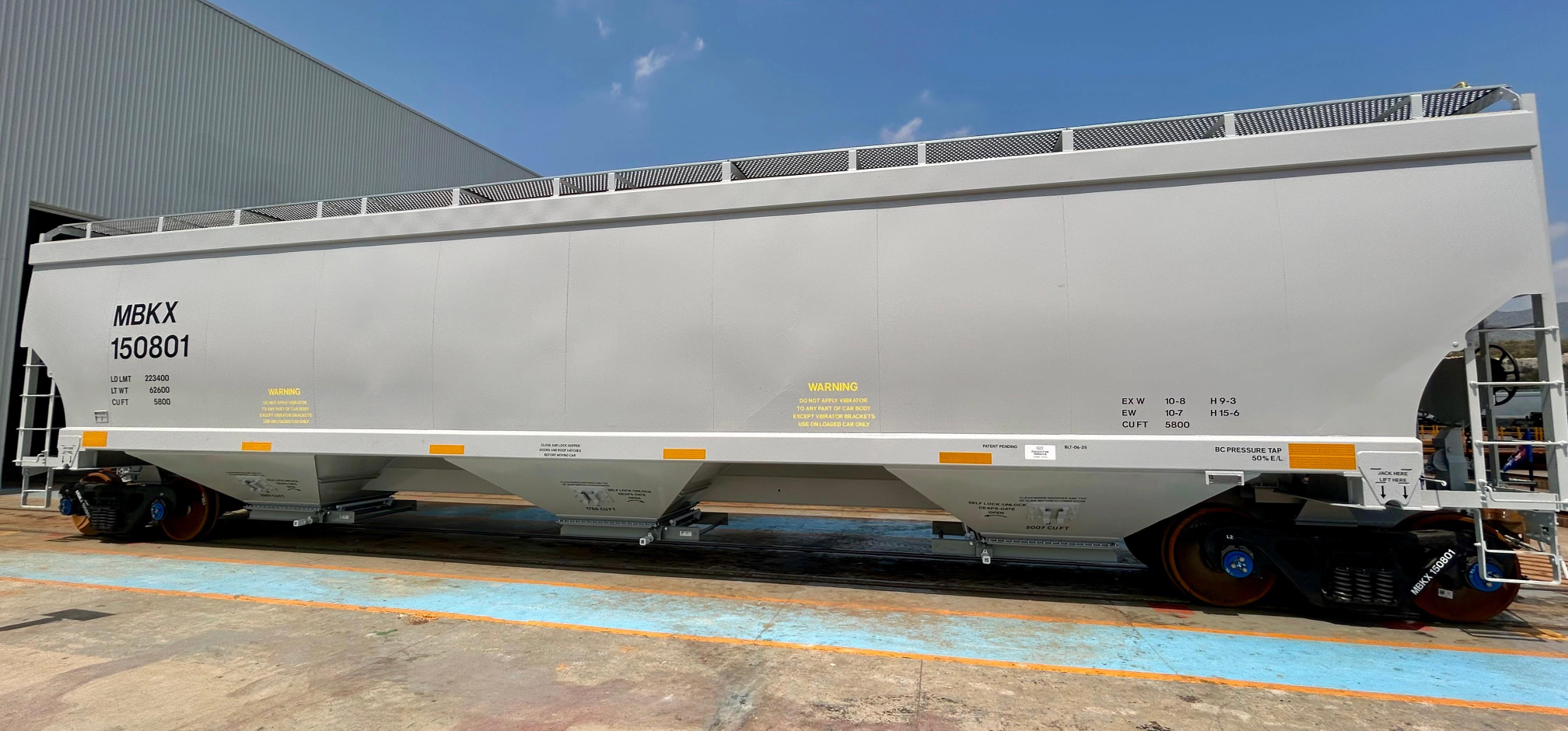
Covered hoppers are really unique, and the reason I like them, follow them and track them is because they obviously support the grain market primarily — grain and whole grains export, domestic use as well as grain products. I think it’s a great sign of the economy overall as one of the macro drivers.
What I’m seeing is that many railroads, as well as grain shippers, were interested in bringing on thousands of new cars in 2025 because of what they saw as a very robust crop. And that’s exciting. The supply has been there — true, a robust crop — but it’s the demand that’s caused them to pause their new builds.
So, by and large, I’ve seen across the board that the large railroads and others are not bringing volumes of new covered hopper cars into the market. I do see some change for fertilizer cars and some of the grain products, but those are not at the volume of the thousands of grain cars that we’re talking about.
Of the billions of bushels of soybeans being produced in the U.S., half of those billions of bushels typically get sold to China, more than half in some cases. Moving into October, we have no contracts with China. And there’s no current contract expectation in the future other than hope, because of some of the discussions with TikTok and open discussions with China that may be parlayed into discussions on grain, particularly soybeans.
Right now, the demand for those soybeans is being filled entirely by Argentina and Brazil — and we see investment from China in those countries. I think those trends of supplying so much from the United States may be challenged and face significant headwinds because of the relationship with China.
A lot of things play into it, though: the dollar, etc. So there’s still hope. I just think, right now, soybeans in particular could drag our covered-hopper demand down — and our export demand down.
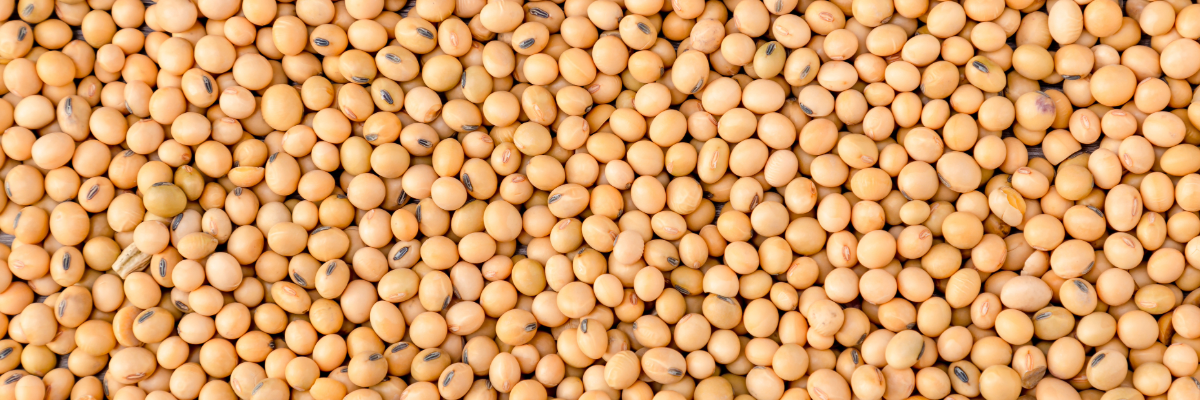
Yeah, there’s always risk, but there’s a lot of hope in that the bill passed administratively earlier this year provided for continuation of a production tax credit (PTC) issued by the Department of Treasury. It’s called Bill 45Z. It’s a credit for those who produce biodiesel, renewable fuels and alternative fuels.
What that means is it drives demand for ethanol. We see ethanol at the gas pump, and that demand is stable right now and growing, quite frankly, as well as the export of ethanol. Then we see the processed soybeans for renewable diesel. That’s really been a big boom from this 45Z Bill from the producer tax credit. I expect that will drive demand.
We’re seeing a lot of expansion of new facilities being built throughout the United States. So that’s exciting. It’s just not as large on the macro basis volume for covered hopper demand. But there’s really good demand, primarily driven by the tax credit and, quite frankly, the ability to get reasonably priced corn and soybeans domestically.

They’re a market leader, and they really have been converting to the shorter, lighter grain cars. They’re better. The capacity is better for them. They can use them and put more cars into a unit train to be more efficient. Railroading is really all about efficiency, right? Because that drives profit, sustainability, etc.
Railroads, by and large, have had a really good run from an operating ratio perspective over the Class I carriers, and the revenue per ton mile has been really on an uptick for most carriers. So we’re seeing some great efficiency from the railroads. They’ve really, so to say, wrung the rag on efficiency, and they’re ready for more volume.
The thing I get concerned about as an ex-railroader is that you try to always optimize your supply and your rail service with demand. And if we see a downturn in demand for large volumes — billions of bushels of soybeans, etc. — I would expect that the railroads would have to act in kind to match their service to that demand.
So with the reduction in coal and the reduction in some of the larger commodities, I hope the railroads can sustain the service that they provide. It’s been much more efficient. I expect to see them add thousands of covered hoppers in the future. These are the 5,000 cubic foot to 5,400 cubic foot capacity cars. And that’s really good for the United States. It’s really good for the sustainability of the railroad.
I’m excited about the merger potential of Union Pacific (UP) and Norfolk Southern (NS) — as an ex-railroader, I see a lot of efficiencies there, provided that the customers’ and shippers’ interests are protected. So a lot of things are happening on the rail side. That merger is a big one, and we’ll hopefully see more traction in the coming year, 2026, to see how that lands.
Want to listen to the entire 11-minute interview?
Click here for Bryan Vaughn’s insights on all things agriculture and grain.